

Third-Party Liability: Who’s Really at Fault?
When an Accident Reveals a Web of Responsibility
Third-party liability is the legal principle that holds an at-fault party responsible for compensating someone they have injured or whose property they have damaged. In an insurance context, the parties are:
- First Party: The at-fault person who holds the insurance policy.
- Second Party: The insurance company that provides the policy.
- Third Party: The injured person filing a claim for compensation.
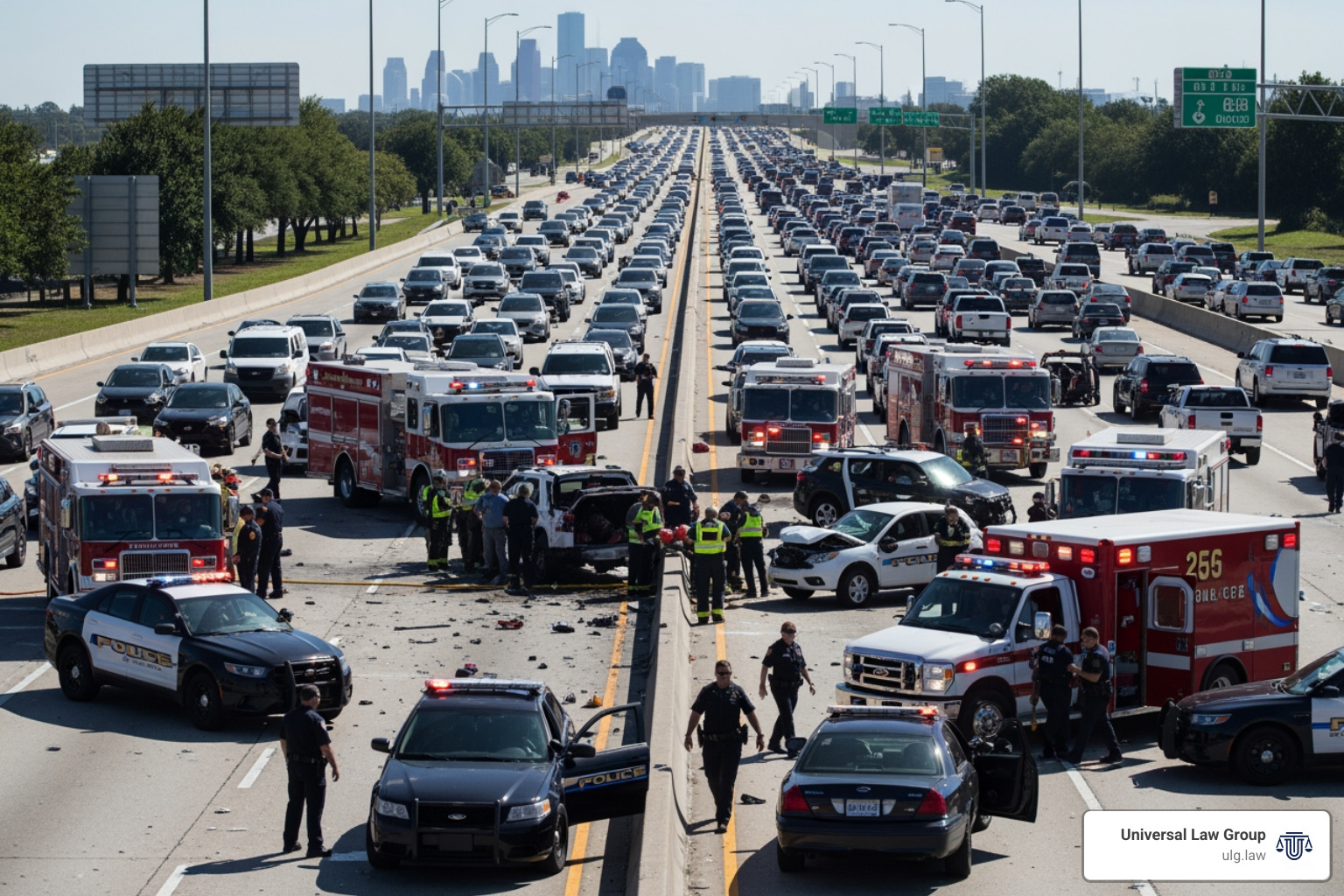
An accident happens in seconds, but determining who is truly responsible can take months. When another driver hits you on a Houston freeway, you might assume their insurance will simply pay for your damages. However, the reality is often more complex. The driver who hit you may not be the only one liable for your injuries—their employer, a bar that over-served them, or even a vehicle manufacturer could share responsibility. Understanding third-party liability is crucial because it can dramatically increase the compensation available to you.
In Texas, our at-fault system means the person who causes an accident is financially responsible. Yet, many drivers carry only the minimum coverage of $30,000 per person for injuries, an amount that rarely covers the costs of a serious accident. When damages exceed these low limits, identifying all potentially liable parties becomes essential to securing full compensation.
I’m Brian Nguyen, co-founder and Managing Partner of Universal Law Group, and I use my experience as a former Assistant District Attorney to steer these complex cases for our clients. We know how to build compelling evidence of liability and maximize recovery for accident victims facing inadequate insurance coverage or disputed claims.
Key Takeaways
- Multiple parties can share liability. The driver who caused the accident may not be the only responsible party. Employers, bars, manufacturers, or property owners can also be liable, which can increase total compensation.
- Third-party claims focus on the at-fault party’s insurance. The injured person files a claim against the at-fault party’s insurer, which investigates, negotiates, and may settle or litigate based on evidence of negligence.
- Texas at-fault laws make liability critical. The person who caused the accident must pay for damages, but minimum insurance limits (30/60/25) often fall short of covering serious injuries.
- Identifying all liable parties protects your recovery. When damages exceed policy limits, finding additional responsible parties becomes essential to secure full financial compensation.

What is Third-Party Liability? The Core Concepts Explained
When an accident occurs, the concept of third-party liability is the cornerstone of how compensation is sought and distributed. It provides financial protection for the at-fault party and a path to recovery for the injured party.

The Three Parties in an Insurance Claim
A third-party liability claim involves three key roles:
- First Party (The Insured): The person who purchased the insurance policy and allegedly caused the harm. In a car accident, this is the at-fault driver.
- Second Party (The Insurer): The insurance company that issued the policy to the first party. Their role is to investigate claims and pay for damages if their insured is found liable, up to the policy limits.
- Third Party (The Claimant): The individual who suffered harm (bodily injury or property damage) due to the first party’s actions. If you were hit by another driver, you are the third party.
Third-party liability insurance protects the policyholder from claims made by others. It differs from “first-party” coverage (like collision or MedPay), which covers your own damages regardless of fault. The legal basis for a third-party claim is almost always negligence—the failure to use reasonable care, which results in harm to another. These cases are a form of Unintentional Tort.
How a Third-Party Claim Works
After an accident caused by someone else, the path to compensation begins by filing a third-party claim against the at-fault party’s insurance. The process generally follows these steps:
- Reporting the Incident: We inform the at-fault party’s insurer about the accident and your intent to file a claim.
- The Insurer’s Investigation: The insurance company assigns an adjuster to investigate fault and assess damages. The adjuster’s goal is to protect the insurer’s financial interests by minimizing the payout.
- Negotiation: We present a demand package with evidence of your medical bills, lost wages, and other losses to negotiate a fair settlement. The adjuster will likely counter with a lower offer.
- Filing a Lawsuit: If negotiations stall or the insurer disputes liability, filing a personal injury lawsuit may be necessary. This action often prompts a more serious settlement offer before the case goes to trial. For more on this process, Nolo provides a general overview on Filing a Third-Party Car Insurance Claim After an Accident.
Understanding Your Third-Party Liability Insurance Coverage
It’s important to understand what third-party liability coverage entails, both for your own protection and to know what to expect from the at-fault party’s policy. This insurance covers costs if you are found legally responsible for causing injury or damage to someone else.

Key components of a liability policy include:
- Bodily Injury Liability (BIL): Pays for the medical expenses, lost wages, and pain and suffering of others injured in an accident you cause.
- Property Damage Liability (PDL): Covers the cost of repairing or replacing another person’s property, such as their vehicle, that you damage.
- Duty to Defend: Your insurer is obligated to provide and pay for your legal defense if you are sued over an accident, even if the lawsuit is baseless.
- Policy Limits: Every policy has a maximum payout amount, often expressed as 30/60/25. This represents the limits for bodily injury per person, per accident, and property damage per accident.
What Damages Does Third-Party Liability Cover?
When another’s negligence harms you, their third-party liability insurance is meant to compensate you for a range of damages, including:
- Medical Expenses: All costs from emergency room visits and surgery to physical therapy and future medical care.
- Lost Wages: Compensation for the income you’ve lost while unable to work, including loss of future earning capacity for permanent injuries.
- Pain and Suffering Damages: Non-economic damages for physical pain, mental anguish, and loss of enjoyment of life. We fight for fair Pain and Suffering Damages.
- Vehicle Repair or Replacement: Costs to repair your vehicle or, if it’s a total loss, its replacement value.
- Diminished Value: In Texas, you can claim the loss in your vehicle’s resale value after an accident, even post-repair. Learn more about Diminished Value Texas.
- Other Property Damage: Covers damage to other property, like a fence, mailbox, or personal items inside your car.
Common Scenarios Involving Third-Party Liability
Third-party liability applies to more than just car crashes. Common scenarios in Houston include:
- Car Accidents: The most frequent application, covering everything from rear-end collisions to crashes caused by drunk or distracted drivers. Texas has specific Distracted Driving Laws in Texas: Your Guide that can help establish fault. See our page on Car Accidents for more.
- Premises Liability Incidents: Property owners must keep their premises safe. If they fail, their insurance may be liable.
- Slip and Fall Accidents: A Slip and Fall Lawyer can help if you’re injured due to a hazard like a wet floor or unmarked obstacle on someone’s property.
- Dog Bites: A dog owner’s homeowner’s insurance is often responsible for injuries caused by their animal. See our page on Dog Bites for details.
What Is Typically NOT Covered by Third-Party Liability Insurance?
It’s crucial to know the limitations of liability coverage. Generally, it does NOT cover:
- Your Own Injuries or Vehicle Damage: Liability insurance covers damage you cause to others. Your own damages are covered by your health insurance, MedPay, or collision coverage.
- Intentional Acts: Policies cover accidents, not deliberate harm. These are considered Intentional Torts and are excluded.
- Damages Exceeding Policy Limits: The policyholder is personally responsible for any damages awarded above their coverage limits.
- Business-Related Incidents: A personal policy won’t cover accidents that occur while conducting business; a commercial policy is needed for that.
- Punitive Damages: In Texas, insurance policies often exclude coverage for punitive damages, which are meant to punish egregious behavior.
Texas Insurance Laws and the Financial Risks of an Accident
Understanding Texas insurance laws is critical to grasping the financial fallout of an accident. Texas operates under an “at-fault” system, placing the financial burden squarely on the responsible party.
Texas as an “At-Fault” State
In an “at-fault” or “tort” state like Texas, the driver who caused the accident is legally responsible for the other party’s damages. Their third-party liability insurance is the primary source of compensation for the victim’s medical bills, lost wages, and vehicle repairs. This system makes proving fault a crucial step in any claim. You can learn more about the different Texas Car Accident Liability Claim Types.
Mandatory Insurance Requirements in Texas
To ensure at-fault drivers can cover some of these costs, Texas law mandates minimum liability coverage. According to the Texas Department of Insurance (TDI), all drivers must carry at least:
- $30,000 for bodily injury per person
- $60,000 for bodily injury per accident
- $25,000 for property damage per accident
This is known as 30/60/25 coverage.
The Dangers of Minimum Coverage
While legal, carrying only minimum coverage is incredibly risky. A single serious injury can easily result in medical bills far exceeding the $30,000 limit. Likewise, the $25,000 property damage limit is often not enough to replace a modern vehicle. When damages exceed these limits, the at-fault driver is personally responsible for the rest.
This gap can lead to severe financial consequences for the underinsured driver, including:
- Personal Liability: If a court judgment exceeds your insurance limits, you must pay the difference out of pocket.
- Asset Seizure: To satisfy a judgment, your personal assets, including savings, investments, and property, could be at risk. This raises the terrifying question: Can I Lose My House Due to an At-Fault Car Accident?
- Wage Garnishment: A court can order a portion of your future wages to be withheld to pay the debt.
These risks underscore why adequate third-party liability coverage is essential for protecting your financial future.
Identifying Other Responsible Parties in a Houston Accident
The at-fault driver is often just the starting point. Our experience shows that the chain of responsibility can extend to other third parties, which is crucial for securing full compensation, especially when a driver is underinsured. A thorough investigation may reveal that other parties share liability for a Houston accident.
Potential responsible parties include:
- Employers (Respondeat Superior): If an employee causes an accident while on the job (e.g., a delivery driver), their employer can be held liable. This is common in cases we handle as Commercial Vehicle Accident Texas lawyers and is especially relevant in crashes involving large trucks, where a Houston Semi Truck Wreck Lawyer is needed.
- Bars and Restaurants (Dram Shop Liability): Texas Dram Shop Law in Texas allows victims to hold establishments liable for over-serving alcohol to a patron who then causes a drunk driving accident.
- Manufacturers and Mechanics: If an accident is caused by a defective vehicle part (like faulty brakes) or a negligent repair, the manufacturer or mechanic may be held liable.
- Government Entities: In some cases, a government body can be held responsible for an accident caused by poor road design, lack of signage, or failure to maintain safe road conditions. These claims have strict rules and deadlines.
- Property Owners: Unsafe conditions on private or commercial property can lead to accidents. Under premises liability, a property owner may be liable for injuries caused by hazards like poor lighting or obstructions. Our guide explains What is Premises Liability? A Comprehensive Guide.
Identifying these additional parties requires a deep understanding of Texas law. We examine every detail to uncover all potential sources of recovery for our clients.
Frequently Asked Questions about Third-Party Liability Claims
After an accident, you likely have many questions about how third-party liability claims work. Here are answers to some common inquiries we receive from clients in Houston.
How does a third-party claim work in an at-fault state like Texas versus a no-fault state?
The process for seeking compensation varies by state.
- Texas (At-Fault): As an at-fault state, the person who caused the accident is financially responsible. You file a third-party claim directly with the at-fault driver’s insurance to cover your damages. You must prove the other driver was negligent.
- No-Fault States: In these states, you first file a claim with your own Personal Injury Protection (PIP) coverage for medical bills, regardless of fault. You can only pursue a third-party claim against the at-fault driver if your injuries are “serious” or exceed a monetary threshold. The Insurance Information Institute offers more Background On: No-Fault Auto Insurance.
What should I do if the at-fault driver’s insurance company offers a quick settlement?
Be cautious. A quick settlement offer may seem appealing, but it is almost always a lowball offer that does not account for the full extent of your injuries, which may not be apparent for days or weeks. Once you accept a settlement, you waive your right to seek any further compensation for that accident, no matter how high your future medical bills are. Always consult with an attorney before signing anything from an insurance company. Our Successful Auto Claim Tips From Car Accident Lawyers explain why this is a critical step.
Can I still file a third-party claim if I was partially at fault for the accident?
Yes. Texas follows a “51% Modified Comparative Fault” rule. This means you can still recover damages as long as you are 50% or less at fault for the accident. However, your final compensation will be reduced by your percentage of fault. For example, if you have $100,000 in damages but are found to be 20% at fault, you can recover $80,000. Because insurance companies will try to shift blame to reduce their payout, having an experienced attorney is vital to protect your right to fair compensation.
Protecting Your Rights and Financial Future
Navigating third-party liability after an accident is complex. What seems straightforward can involve a tangled web of responsibility, where the at-fault driver is just the starting point. A thorough investigation can uncover other liable parties—from employers to property owners—who are crucial to securing the compensation you need to recover.
At Universal Law Group, we understand that an accident can turn your life upside down. Our experience with complex liability cases, combined with our background as former prosecutors, allows us to build strong, evidence-based claims. We hold every responsible party accountable and stand up to large insurance companies to maximize our clients’ recovery.
If you or a loved one has been injured in a Houston accident, do not steer the claims process alone. The stakes are too high, and insurers are not on your side. Contact our Houston personal injury attorneys for a free consultation. Let us handle the legal complexities so you can focus on what matters most: your recovery.
About the Author

