

How to Prevent Distracted Driving: Smart Ways to Keep Your Eyes on the Road
The Urgent Need to Stop Distracted Driving Deaths
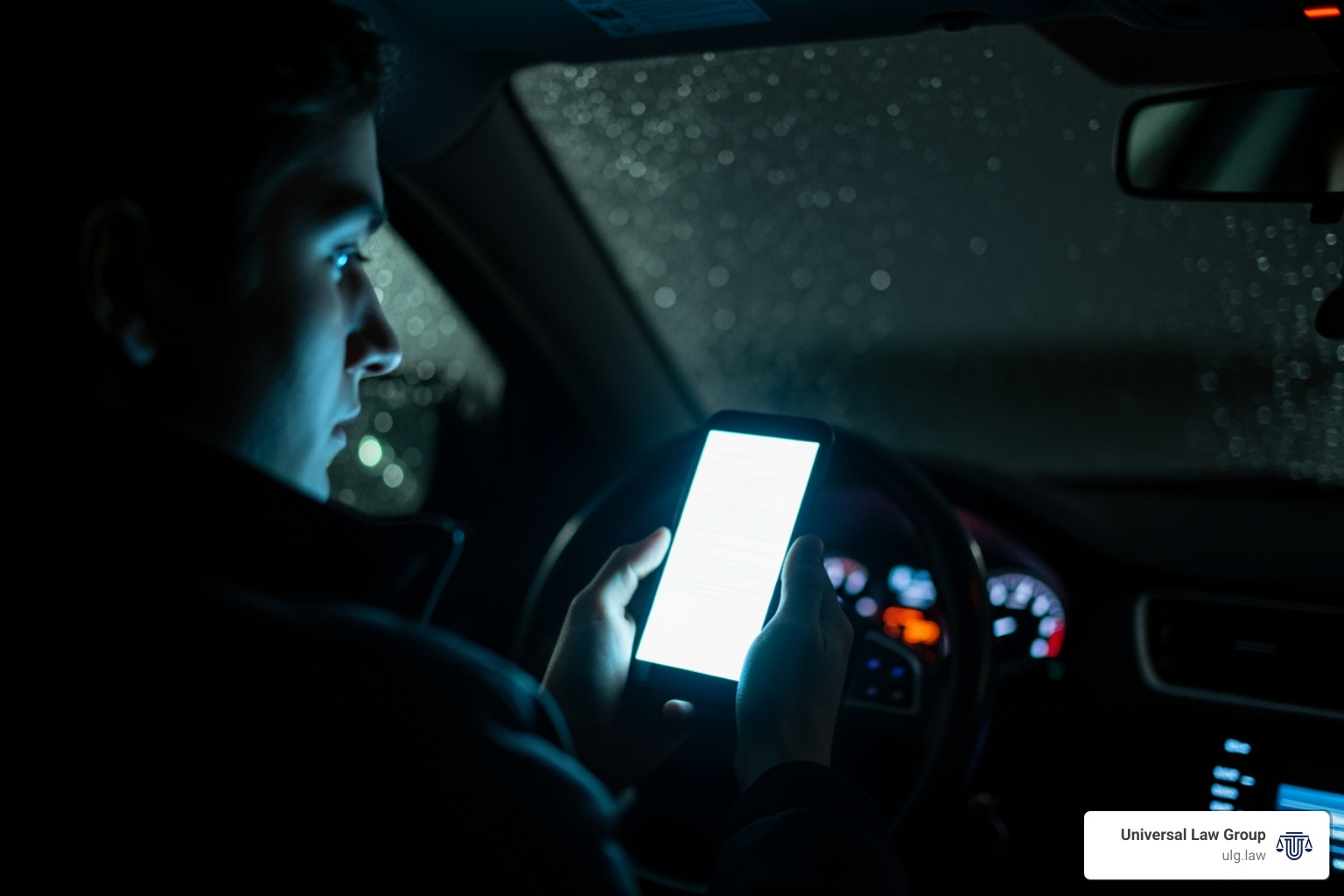
How to prevent distracted driving starts with a sobering truth: nine people die daily in the U.S. in crashes involving distracted drivers. In 2021, these preventable tragedies claimed 3,522 lives and injured thousands more. Distracted driving is any activity that diverts your attention—visually, manually, or cognitively—from the task of safe driving.
Here are the most effective ways to prevent distracted driving:
- Prepare before you drive – Adjust mirrors, seats, climate controls, and set your GPS before starting the engine
- Put your phone away – Store it in the glove box or trunk and activate ‘Do Not Disturb’ mode
- Avoid multitasking – No eating, grooming, or reading while driving
- Secure distractions – Make sure children, pets, and loose items are properly secured
- Pull over when needed – If something demands your attention, find a safe place to stop
- Use passengers as co-pilots – Let them handle navigation, calls, and texts
- Set an example – Model focused driving for teens and other new drivers
- Understand the three types of distraction – Visual (eyes off road), manual (hands off wheel), and cognitive (mind off driving)
The tragedy is that these deaths are almost entirely preventable. Unlike many traffic hazards, distracted driving is a choice—one that drivers make when they glance at a text, reach for food, or scroll through a playlist.
As the Managing Partner of Universal Law Group’s personal injury division, I’ve seen the devastating consequences of distracted driving firsthand. Representing victims across Texas has shown me that education and a commitment to focused driving are essential to saving lives.
Whether you’re a daily commuter on Houston’s busy highways or a parent teaching a teen to drive, preventing distracted driving is critical. The good news is that with proactive planning, you can eliminate nearly all distractions before they become dangerous.

The Sobering Reality: Understanding the Risks and Statistics
The statistics on distracted driving reveal a pervasive crisis. In 2021, these crashes claimed 3,522 lives in the U.S., representing thousands of families torn apart. What’s particularly alarming is the impact on vulnerable road users. About 1 in 5 people who died in crashes involving a distracted driver in 2019 were not in vehicles—they were walking, riding their bikes, or otherwise outside a vehicle. This highlights that distracted driving endangers everyone.
To truly grasp the danger, consider this: taking your eyes off the road for just five seconds while traveling at 55 mph means you’ve driven the entire length of a football field with your eyes closed. It’s a terrifying thought, yet it’s the reality for many distracted drivers.
The problem is especially acute in Texas. Our state’s busy highways, particularly in urban centers like Houston, see a high number of accidents where distraction is a major factor. For local insights, explore the Distracted Driving – Texas Open Data Portal. To understand more about our city’s specific challenges, read our article, Is Houston the Deadliest Place to Drive?.
The risks go beyond fatalities. Drivers using cell phones can experience “inattentional blindness,” failing to see up to 50% of their driving environment. Even with eyes on the road, their brain isn’t processing critical information. Distracted driving is not a momentary lapse; it’s a profound impairment that compromises the ability to drive safely.
Your Proactive Plan: How to Prevent Distracted Driving
Preventing distracted driving is about being prepared and making conscious choices to prioritize safety. Just as we check our fuel or tires before a long journey, we should prepare our minds and environment for focus.

Our proactive plan begins before the car even moves with a simple pre-drive checklist:
- Adjust Everything First: Adjust your seat, mirrors, and climate controls before putting the car in drive.
- Set Your Course: Plan your route, set your GPS, and choose your playlist before you begin.
- Secure Loose Items: Stow any loose gear or possessions that might roll around and tempt you to reach for them.
- The “Out of Sight, Out of Mind” Method: Activate ‘Do Not Disturb’ mode and store your phone where you can’t see or reach it, like the glove box or trunk.
- Manage Your In-Car Environment: Ensure children and pets are properly secured. If they need attention, pull over safely to address the issue.
- Avoid Emotional Conversations: Postpone emotional or heated discussions, whether with passengers or on a hands-free call, as they are a major cognitive distraction.
- The “Pull Over” Rule: Make this your golden rule: If anything demands your attention, find a safe place to stop. No message or task is worth a collision.
By incorporating these steps into your routine, you drastically reduce the chances of succumbing to preventable distractions. For more ways to stay safe on the road, check out our insights on 5 Ways to Avoid Car Accidents.
Practical Tips for a Distraction-Free Drive
- Eat Before You Drive: Finish meals and snacks before you start your trip or wait until you arrive. Eating while driving is a manual and cognitive distraction.
- Finish Grooming at Home: Personal grooming should happen before you leave, not in traffic.
- Organize Your Vehicle: Keep your car tidy to avoid fumbling for items.
- Let Calls Go to Voicemail: Most calls can wait. Let them go to voicemail to maintain focus.
- Use Passengers as Co-Pilots: Delegate tasks like navigation, music selection, or answering calls to your passengers.
How Technology Can Help (and Hurt)
Technology is a double-edged sword. While features like in-vehicle infotainment systems offer convenience, they can also be highly distracting. Interacting with menus and settings takes your focus from the road. Use voice commands when possible and make complex adjustments before you drive.
Conversely, technology can also be a solution. Apps are available to block notifications and reward safe driving habits. For a list of tools, see these Apps to help you avoid cell phone use while driving.
A common myth is that hands-free devices are completely safe. While they keep your hands on the wheel, they do not eliminate cognitive distraction—when your mind is not on the task of driving. Research shows that engaging in a complex conversation, even hands-free, significantly diverts your brain’s attention. As detailed in Cognitive distraction research, your brain cannot effectively multitask while driving. Even if you are legally compliant in Texas, a hands-free call can mean your mind is miles away from the road.
A Collective Responsibility: Roles for Passengers, Parents, and Employers
Preventing distracted driving is a shared responsibility that extends to everyone in our community. From passengers to parents and employers, we all have a part to play in fostering a culture of road safety.

The Co-Pilot’s Duty: How Passengers Can Help
Passengers can be invaluable allies against distracted driving. As a passenger, you can influence the driver’s behavior.
- Speak Up: If you see the driver is distracted, speak up. A polite reminder can make a huge difference.
- Be the Navigator: Manage the GPS to free the driver from looking at a screen.
- Manage Communications: Offer to handle calls or texts to keep the driver’s hands on the wheel.
- Keep it Calm: Avoid emotional or heated discussions that can divert the driver’s focus.
- Reduce the Workload: Help with tasks like adjusting the radio or attending to children.
A Parent’s Guide to How to Prevent Distracted Driving in Teens
Teen drivers are at a higher risk for distracted driving due to inexperience and developing brains. A parent’s role in teaching how to prevent distracted driving is absolutely critical.
- Lead by Example: Your actions are the most powerful lesson. Always drive distraction-free yourself.
- Establish Clear Rules: Talk openly with your teen about the dangers and establish firm rules about phone use.
- Use a Parent-Teen Driving Agreement: Formalize expectations with a signed agreement outlining rules and consequences.
- Understand GDL Laws: Know and enforce Texas’s Graduated Driver Licensing (GDL) laws, which prohibit wireless device use for novice drivers under 18. The IIHS offers great resources on Graduated Licensing.
- Set Consequences: Clearly define the legal and familial consequences for breaking the rules, such as loss of driving privileges.
- Use Resources: Use resources from organizations like the NHTSA on safe teen driving.
The Employer’s Role in Workplace Road Safety
For businesses with employees who drive, distracted driving presents significant risks and liabilities. Distraction is present during 52% of normal driving, posing a major threat to workers.
- Create a Formal Policy: Implement a clear, written policy banning all forms of distracted driving for employees on the road for work, in any vehicle.
- Know the Costs: Recognize the high cost of work-related crashes. A non-fatal injury crash can cost an employer over $100,000, not including legal fees and reputational damage.
- Understand Legal Liability: Employers can be held liable for distracted driving accidents caused by employees. The FMCSA fines drivers up to $2,750 and employers up to $11,000 for violations. Learn more about commercial motor vehicle laws and Texas-specific rules for a Commercial Vehicle Accident in Texas.
- Use Technology: Consider using phone-blocking technology or in-vehicle monitoring systems to enforce your policy.
- Communicate and Train: Regularly train all employees on the policy and the risks of how to prevent distracted driving.
The Legal Consequences: Texas Laws and Penalties
Driving is a privilege that comes with the responsibility to operate a vehicle safely. When a driver chooses to be distracted, they face significant legal consequences, especially in Texas.
Understanding Texas’s Ban on Texting While Driving
Texas’s statewide ban makes it illegal to “read, write, or send an electronic message” while driving. This covers texting, emailing, and using social media.
- Fines for a first offense: A first offense carries a fine of $25 to $99.
- Increased penalties for repeat offenses: Repeat offenses can result in fines from $100 to $200, plus court costs and higher insurance premiums.
- Exceptions to the law: Exceptions include using a phone for emergencies, using a GPS (if set before driving), or using a hands-free device. First responders are also exempt during emergencies.
- Novice drivers and school zones: The law is stricter for young drivers. Those under 18 are banned from all wireless device use for their first year of driving. Using a handheld device in a school zone is also illegal.
For a comprehensive guide, review our article, Distracted Driving Laws in Texas: Your Guide.
Beyond Texting: Other Violations and Civil Liability
While texting is explicitly banned, other distractions can still lead to legal trouble and civil liability if they cause an accident.
- Local ordinances: Many Texas cities have stricter ordinances, such as complete handheld device bans. Always be aware of local laws.
- How distraction proves fault in an accident: If a driver’s distraction causes a collision, it is key to proving fault. Violating the texting ban can establish “negligence per se,” meaning the act is inherently negligent and makes it easier to prove fault.
- Impact on a Car Accident Settlement Texas: For victims, proving the other driver was distracted is crucial for a successful personal injury claim. Evidence like phone records can significantly impact a Car Accident Settlement Texas. The at-fault driver can be held liable for medical bills, lost wages, and pain and suffering. Learn more about Common Causes of Car Accidents in Texas: What Happens.
The legal consequences are a powerful reminder that our actions behind the wheel have serious ramifications. Driving without distraction is a legal and moral obligation.
Frequently Asked Questions About Preventing Distracted Driving
We often hear common questions from clients about how to prevent distracted driving and what to do if they’ve been affected. Here are some answers:
What are the most effective strategies for how to prevent distracted driving?
The most effective strategies are proactive. Prepare before you drive by adjusting your car’s settings and setting your GPS. Put your phone completely out of sight and reach, and activate ‘Do Not Disturb’ mode. Commit to single-tasking—no eating, grooming, or emotional conversations. Finally, model safe driving habits for others, especially new drivers.
Is it illegal to use a hands-free device while driving in Texas?
For most adult drivers in Texas, using a hands-free device is legal. However, there are important exceptions:
- Novice Drivers: Drivers under 18 are prohibited from using any wireless device, even hands-free, during their first year of driving.
- School Zones: All drivers are banned from using handheld devices in active school zones.
Legal does not mean safe. Hands-free devices still cause significant cognitive distraction, or “inattentional blindness,” which impairs your ability to drive safely. For more on related laws, see our guide: Is it Illegal to Wear Headphones While Driving?.
What should I do if I’m injured by a distracted driver?
If a distracted driver injures you, take these steps immediately:
- Ensure Safety and Get Medical Care: Move to a safe location if possible and call 911. Seek medical attention, as some injuries aren’t immediately apparent.
- Get a Police Report: An official police report is vital for insurance and legal claims.
- Document Everything: Take photos of the scene, vehicle damage, and any signs of distraction.
- Gather Witness Information: Get contact details from any witnesses.
- Exchange Information: Swap contact and insurance details with the other driver.
- Do Not Admit Fault: Avoid apologizing or admitting fault. Let investigators determine liability.
- Contact a Personal Injury Attorney: An experienced attorney can protect your rights, gather evidence like phone records, and fight for the compensation you deserve. Learn more about Preserving Evidence After a Car Accident.
Committing to Safer Roads After a Distracted Driving Accident
The power to prevent distracted driving lies in our individual choices and collective responsibility. By preparing before you drive, putting phones away, and understanding the real risks—including cognitive distraction—we can make our roads safer. Passengers, parents, and employers all have a part to play in creating a culture of focused driving, supported by Texas laws that hold negligent drivers accountable.
At Universal Law Group, we champion education and vigilance as the best defense against distracted driving. We urge every driver to commit to being fully attentive behind the wheel.
However, accidents still happen. If a distracted driver has injured you or a loved one, the aftermath can be overwhelming. Our legal team understands these complex cases and is dedicated to fighting for the justice and compensation you deserve. If you’ve been injured, contact our Houston car accident lawyers to discuss your texting while driving accident case. We are here to help you steer the path forward.
About the Author

