What is Premises Liability? A Comprehensive Guide
Why Property Safety is a Legal Responsibility
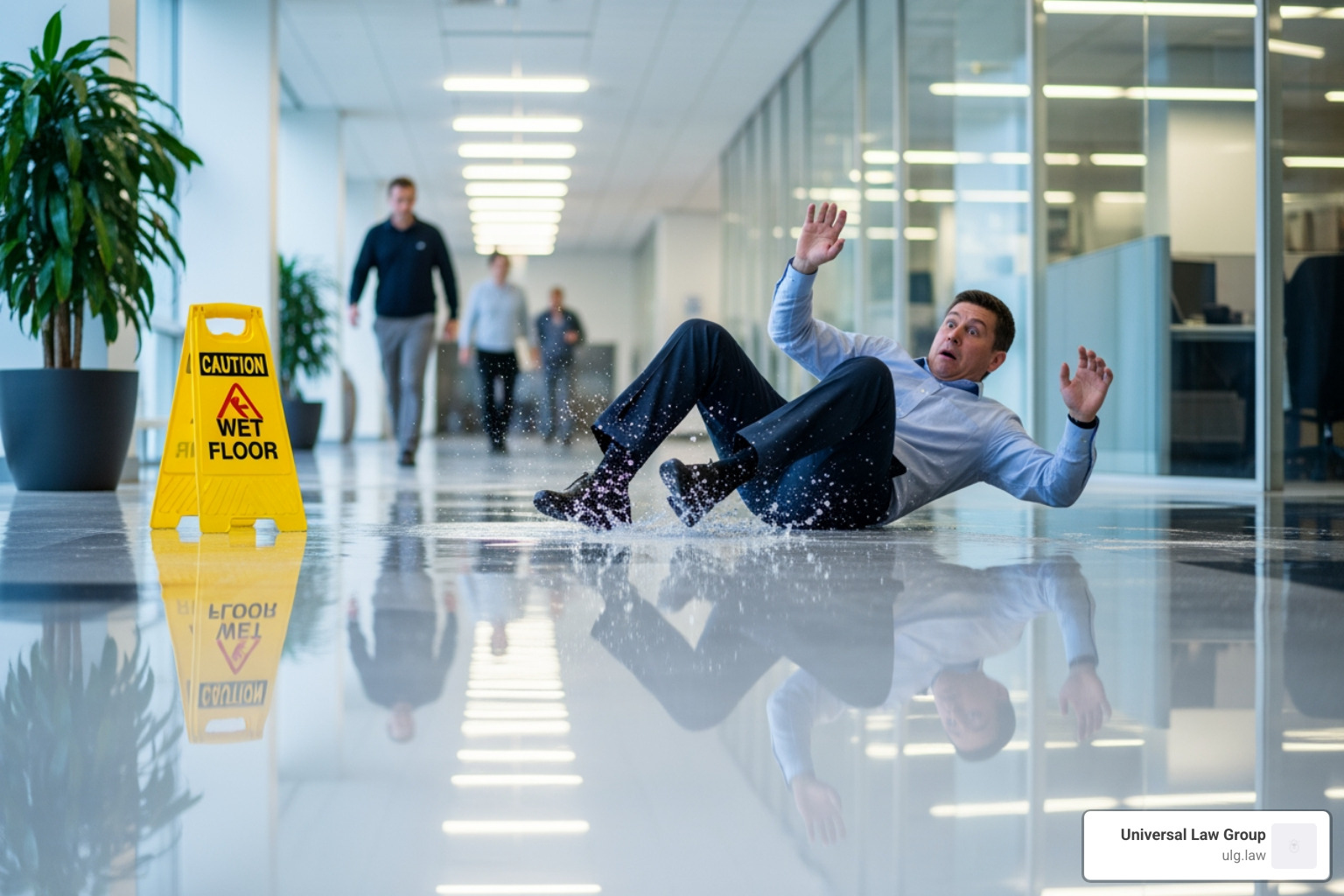
What is premises liability? It is the legal principle holding property owners and occupiers responsible for injuries caused by unsafe conditions on their property. When an owner fails to maintain a safe environment or warn of hazards, this area of law allows the injured person to seek compensation for medical bills, lost income, and other damages.
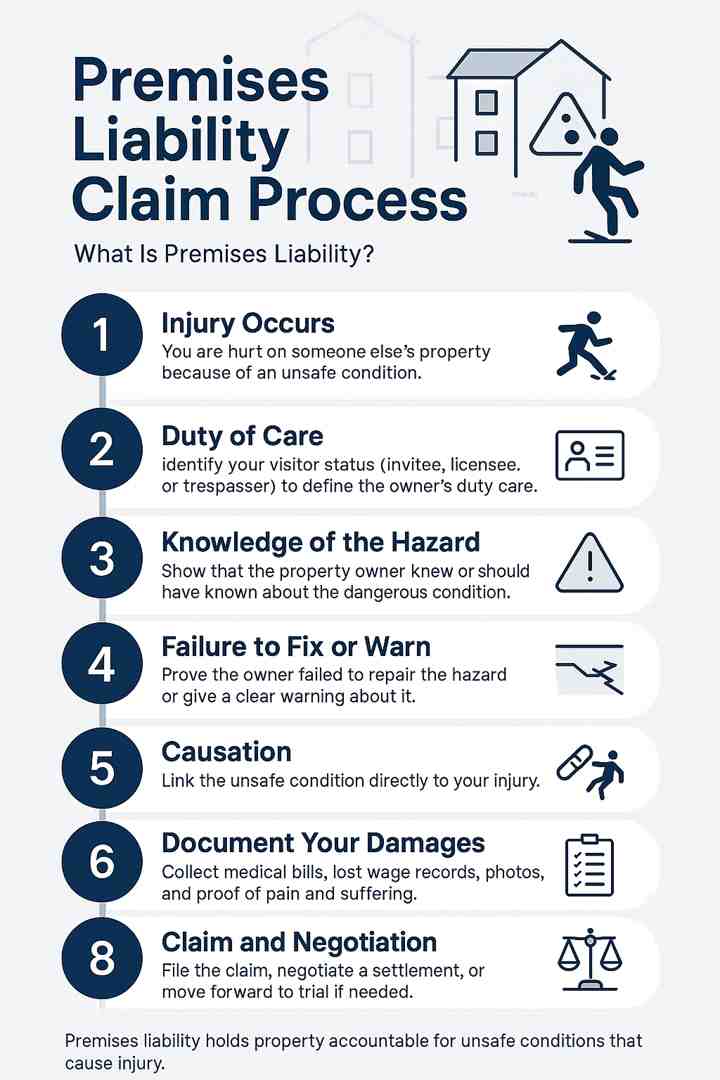
A successful claim hinges on several key aspects. We must prove the owner had a duty of care to the visitor, that they breached this duty, that the breach directly caused the injury, and that the victim suffered quantifiable damages. The specific duty owed often depends on the visitor’s legal status—whether they were an invitee, licensee, or trespasser.
Injuries on another’s property are among the most common personal injury claims in the U.S. In Texas, the statute of limitations generally gives you two years from the date of injury to file a claim. This legal obligation applies to all property owners, from retail stores and apartment complexes to private homes. They must take reasonable steps to prevent foreseeable harm, such as providing adequate lighting, maintaining walkways, and warning of hidden dangers.
The consequences of negligence can be life-altering, ranging from broken bones in a slip and fall to catastrophic injuries from a deck collapse or swimming pool accident.
I’m Brian Nguyen, co-founder of Universal Law Group and head of our personal injury division. With over a decade of experience, including time as a former Assistant District Attorney, I have a deep understanding of what premises liability is and how to build a strong case for those harmed by a property owner’s negligence.
The Foundation of a Claim: What is Premises liability?

When you enter someone else’s property, you have a reasonable expectation of safety. What is premises liability? It’s the area of personal injury law that enforces this expectation. It dictates that property owners and occupiers have a legal duty to keep their premises reasonably safe. If they fail, and someone is injured as a result of a hazard they knew or should have known about, they can be held financially accountable.
Proving Your Case: The Key Elements
To win a premises liability case, we must prove four essential elements:
- Duty of Care: The property owner owed you a legal obligation to maintain a reasonably safe environment. The level of this duty depends on your reason for being on the property.
- Breach of Duty: The owner failed to meet this obligation. This could mean they created a hazard, knew about one and did nothing, or failed to find a danger through reasonable inspection.
- Causation: The owner’s breach of duty directly caused your injuries. We must draw a clear line from the unsafe condition to the harm you suffered.
- Damages: You suffered actual, quantifiable harm. This includes medical bills, lost wages, future medical needs, and pain and suffering. Without damages, there is no claim.
Building a case requires gathering evidence like medical records, incident reports, photos, and witness statements. Our experience as former prosecutors taught us how to build airtight cases, and we bring that same meticulous approach to every premises liability claim we handle. More info about personal injury services in Houston.
Who Can Be Held Responsible?
Liability isn’t always limited to the property owner. Depending on who had control and responsibility for safety, several parties could be held accountable:
- Property Owners: The individual or company that legally owns the property.
- Landlords: Owners of rental properties are responsible for common areas (hallways, parking lots) and known structural defects.
- Commercial Tenants: A business leasing a space is responsible for safety within that area (e.g., a restaurant’s dining room).
- Property Management Companies: Firms hired to handle day-to-day operations can be liable for failing to maintain the property.
- Maintenance Contractors: A third-party company (e.g., cleaning or landscaping) can be liable if their work creates a hazard.
- Government Entities: Cities, counties, or states can be responsible for injuries on public property, though these claims have special rules and shorter deadlines.
Premises Liability vs. Personal Liability
It’s important to distinguish between these two types of negligence. Premises liability is location-specific; the injury stems from a dangerous condition on the property itself, like a broken stair or a slippery floor. The focus is on the property owner’s failure to keep it safe.
Personal liability is action-based; the injury results from an individual’s negligent actions, regardless of location. A car accident caused by a distracted driver is a classic example of personal liability. While both require proving negligence, the source of the duty is different. As a full-service firm, we handle both types of claims. More info about car accident claims.
Your Status Matters: How a Visitor’s Role Affects a Case
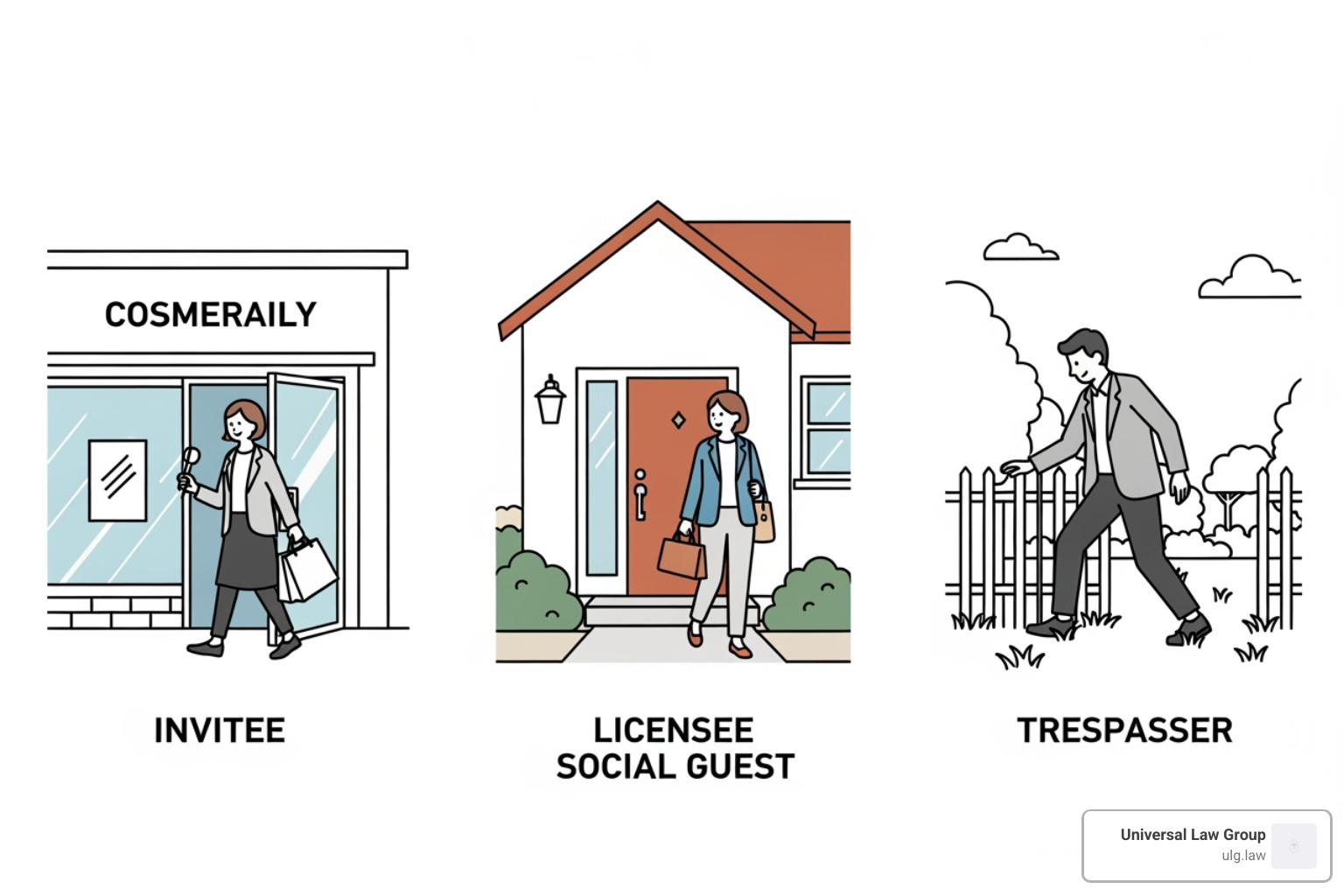
In a premises liability claim, not all visitors are treated equally. The level of care a property owner must provide depends on why you were on the property. Texas law classifies visitors into three categories, and this status is critical to understanding what premises liability is and how it applies to your case. While some states have simplified these rules, Texas still adheres to these traditional classifications, as seen in cases like Rowland v. Christian which prompted changes elsewhere.
The Invitee: The Highest Level of Protection
An invitee is someone who enters a property for the mutual benefit of both themselves and the owner, typically for a business purpose. This includes customers in a store, patients in a doctor’s office, or guests at a hotel.
Duty Owed: Property owners owe invitees the highest duty of care. They must not only repair or warn of known dangers but also actively inspect the property to find and address potential hazards. A store can’t claim ignorance about a spill that’s been on the floor for an hour; they have a proactive duty to look for such dangers.
The Licensee: A Duty to Warn
A licensee is a person on the property with the owner’s permission but for their own purpose, not for the owner’s financial benefit. The most common example is a social guest at a friend’s home.
Duty Owed: The owner must warn a licensee of known dangerous conditions that are not obvious. For example, if a homeowner knows a step on their porch is broken, they must tell their guests. However, unlike the duty to an invitee, the owner generally has no obligation to inspect the property for hidden dangers they don’t know about.
The Trespasser: A Minimal Duty of Care
A trespasser enters a property without any legal right or permission. Because they are not supposed to be there, property owners owe them the lowest duty of care.
Duty Owed: The owner must simply refrain from intentionally or willfully injuring a trespasser. You cannot set traps or act with gross negligence toward a known trespasser. Generally, there is no duty to warn of dangers or make the property safe for them.
A Special Exception: The ‘Attractive Nuisance’ Doctrine
The law makes a special exception for children. The attractive nuisance doctrine recognizes that children may not understand the risks of certain features on a property and may be drawn to them.
This doctrine applies to artificial conditions like swimming pools, trampolines, or construction equipment. If a property owner has such a feature and knows children are likely to trespass, they have a duty to take reasonable steps to prevent harm, such as installing a fence with a locked gate around a pool. This holds the owner responsible for protecting children from dangers they are too young to appreciate. We have seen the devastating consequences when this duty is ignored, especially in cases involving permanent harm like brain injuries.
Common Scenarios and Specific Duties

Understanding what premises liability is becomes clearer when looking at real-world examples. While every case is unique, most fall into several common categories. Proving these cases often comes down to establishing that the property owner had “notice” of the hazard.
Common Examples of Premises Liability Cases
- Slip and Fall Accidents: Caused by wet floors, icy surfaces, or spills.
- Trip and Fall Accidents: Resulting from cracked sidewalks, potholes, debris in aisles, or poor lighting.
- Inadequate Security: When foreseeable criminal acts like assaults or robberies occur due to poor lighting, broken locks, or lack of security personnel.
- Dog bite incidents: When an owner fails to restrain a dangerous animal on their property.
- Swimming Pool Accidents: Drownings or injuries caused by inadequate fencing, poor maintenance, or lack of supervision.
- Elevator and Escalator Accidents: Injuries from sudden stops, misleveling, or mechanical failure.
- Deck or Porch Collapses: Structural failures due to rot, poor construction, or lack of maintenance.
- Falling Merchandise: Items falling from shelves in a retail store due to improper stacking.
- Exposure to Toxic Substances: Harm from mold, lead paint, or asbestos that the owner failed to remediate or warn about.
- Burn injuries: Caused by faulty wiring, gas leaks, or other defects leading to fires.
The Concept of ‘Notice’ in a Premises Liability Claim
A property owner is generally only liable for hazards they knew or should have known about. This is the legal concept of “notice.”
- Actual Notice: The owner or their employee was directly aware of the danger. For example, a customer told a manager about a spill. If they failed to act, liability is strong.
- Constructive Notice: The condition existed for so long that a reasonably prudent owner should have finded it through regular inspection. A puddle from a leaky freezer that has been there for hours is a classic example. Proving constructive notice often requires evidence like surveillance footage or witness testimony to establish a timeline.
Landlord Duties to Tenants and Guests
Landlords have specific duties to their tenants and their guests. While a tenant is responsible for their own unit, the landlord is liable for:
- Common Areas: Maintaining safe conditions in hallways, stairwells, parking lots, and lobbies.
- Hidden Dangers: Disclosing known hazards that a tenant wouldn’t easily find, such as a faulty electrical system.
- Competent Repairs: Ensuring any repairs they undertake are done correctly and don’t create new hazards.
- Adequate Security: In areas where crime is foreseeable, landlords must implement reasonable security measures like working locks, adequate lighting, and controlled access. The importance of lighting was highlighted in cases like Gallagher v. St. Raymond’s R.C. Church, a principle now widely accepted. New York case on landlord liability for lighting.
Navigating the Legal Process: From Claim to Compensation

After an injury on someone else’s property, you face not just a physical recovery but a complex legal journey. Property owners and their insurance companies will use various strategies to deny or minimize your claim. Understanding this process is key to protecting your rights.
Common Defenses Property Owners Use
Expect the defense to challenge your claim. Common arguments include:
- The “Open and Obvious” Doctrine: They will argue the hazard was so apparent that you should have seen and avoided it.
- Comparative Fault: They will claim you were also negligent (e.g., texting while walking) and are partially or fully to blame for your own injury.
- Lack of Notice: The owner will assert they didn’t know and couldn’t have reasonably known about the dangerous condition.
- Statute of Limitations: In Texas, you generally have only two years from the injury date to file a lawsuit. If you miss this deadline, your claim is likely barred forever.
How Your Own Fault Can Affect Compensation
Texas uses a Modified Comparative Fault rule, also known as the 51% Bar Rule. This means if you are found partially at fault, your compensation is reduced by your percentage of fault. For example, if you have $100,000 in damages but are found 20% at fault, you can only recover $80,000. Crucially, if you are found to be 51% or more at fault, you are barred from recovering any compensation at all. This makes it vital to counter defense tactics that try to shift blame onto you.
What Types of Damages Can Be Recovered?
Compensation, or “damages,” is intended to cover all your losses. These can include:
- Economic Damages: Tangible financial losses like past and future medical expenses, lost wages, and diminished earning capacity.
- Non-Economic Damages: Intangible losses that address the human cost of the injury, such as pain and suffering, mental anguish, physical impairment, and loss of enjoyment of life.
- Punitive Damages: In rare cases involving extreme recklessness or malice, these damages may be awarded to punish the defendant and deter similar conduct.
The Role of Insurance in Your Claim
In most premises liability cases, you are not dealing with the property owner directly but with their insurance company. Whether it’s a homeowner’s policy or a Commercial General Liability (CGL) policy, the insurer’s goal is to pay out as little as possible. The insurance adjuster works for the insurance company, not for you. They will look for any reason to devalue or deny your claim.
This is where our firm makes a critical difference. My experience as a former prosecutor means we know how to build a case that insurance companies take seriously. We handle all communications, gather the necessary evidence to prove liability and damages, and negotiate from a position of strength. We protect you from adjuster tactics while you focus on your recovery. If you’ve been injured on someone else’s property due to their negligence, it is important to understand your legal options.
Protect Your Claim
Being injured on someone else’s property can leave you facing physical pain, medical bills, and lost income. Understanding what premises liability is is the first step toward seeking justice. This area of law exists to hold negligent property owners accountable for the harm they cause.
As we’ve discussed, a successful claim depends on factors like your visitor status, whether the owner had notice of the hazard, and countering arguments that you were at fault. These cases are complex, and property owners and their insurers will work hard to protect their bottom line. You should not have to face them alone, especially while trying to recover from an injury. The two-year statute of limitations in Texas also means that time is of the essence.
At Universal Law Group, we treat our clients like family. My background as a former Assistant District Attorney provides our team with a unique advantage in anticipating defense strategies and negotiating with insurance companies. We know how to build a compelling case designed to maximize your recovery.
If you were harmed due to a property owner’s negligence, you deserve representation that puts your interests first. Contact our firm for a free consultation to discuss what happened and learn how we can help. Don’t let the complexity of the law or the pressure from an insurance company prevent you from getting the compensation you deserve.
About the Author