
Beginner’s Guide: How Much Does a Semi Truck Weigh?
Why Understanding Semi-Truck Weight Matters for Your Safety
How much does a semi truck weigh? A fully loaded semi-truck can legally weigh up to 80,000 pounds (40 tons) on most Interstate highways in the United States. Here’s a typical breakdown:
- Tractor (cab) alone: 10,000-25,000 pounds
- Empty trailer: 10,000-14,000 pounds
- Empty semi-truck total: 30,000-35,000 pounds
- Maximum cargo: Approximately 45,000 pounds
- Federal legal maximum: 80,000 pounds total
These massive vehicles share Texas highways with passenger vehicles weighing just 4,000-5,000 pounds—meaning a fully loaded semi can be 20 times heavier than your car. This weight difference is critical for safety, affecting stopping distances and accident severity.
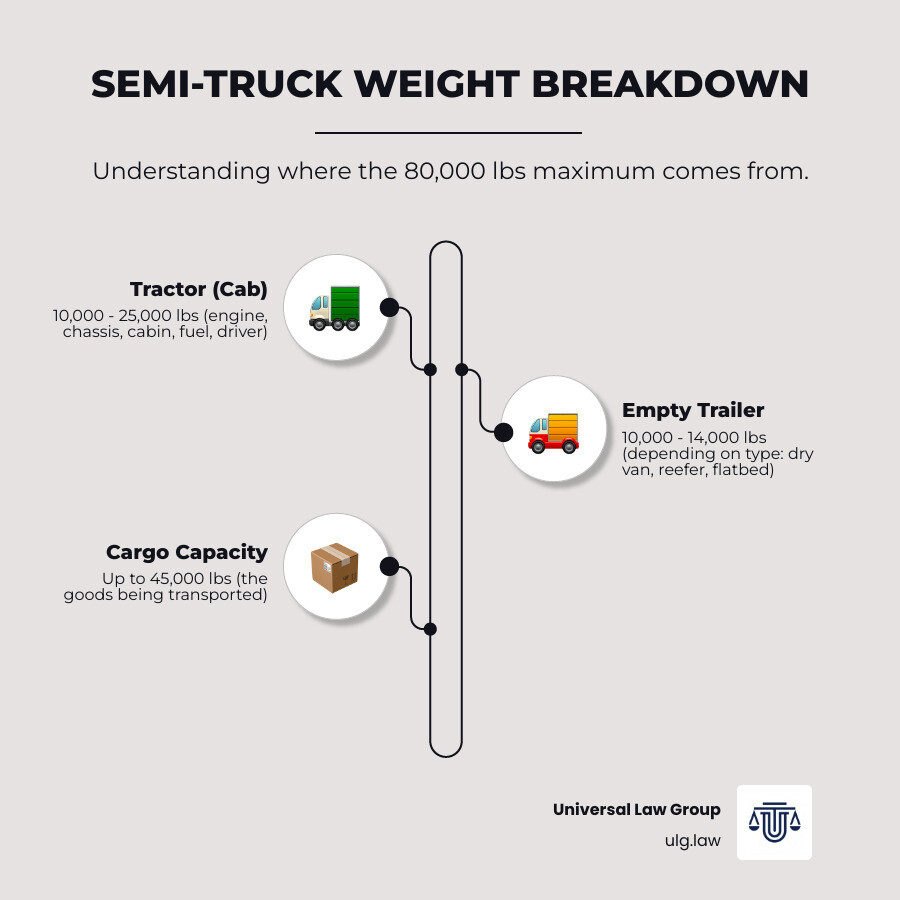
Federal law caps maximum weight at 80,000 pounds on Interstate highways, with specific limits for single axles (20,000 pounds) and tandem axles (34,000 pounds). Texas adopts these federal standards on most major routes. When trucking companies violate these limits, they create extremely dangerous conditions.
I’m Brian Nguyen, Managing Partner at Universal Law Group in Houston. In handling truck accident cases throughout Texas, understanding how much does a semi truck weigh is crucial to building strong legal claims. We examine weight tickets, bills of lading, driver logs, maintenance records, and company policies to prove negligence when weight-related issues contribute to crashes.
For Texas drivers, knowing that an 80,000-pound vehicle can’t stop or maneuver like a car helps you avoid dangerous maneuvers, give trucks extra space, and recognize potential danger signs like overloaded trailers.
Deconstructing Semi-Truck Weight: From Cab to Cargo
To understand how much does a semi truck weigh, we must break it down into components: the tractor, trailer, and cargo.
How Much Does the Tractor (Cab) of a Semi-Truck Weigh?
The tractor typically weighs between 10,000 and 25,000 pounds.
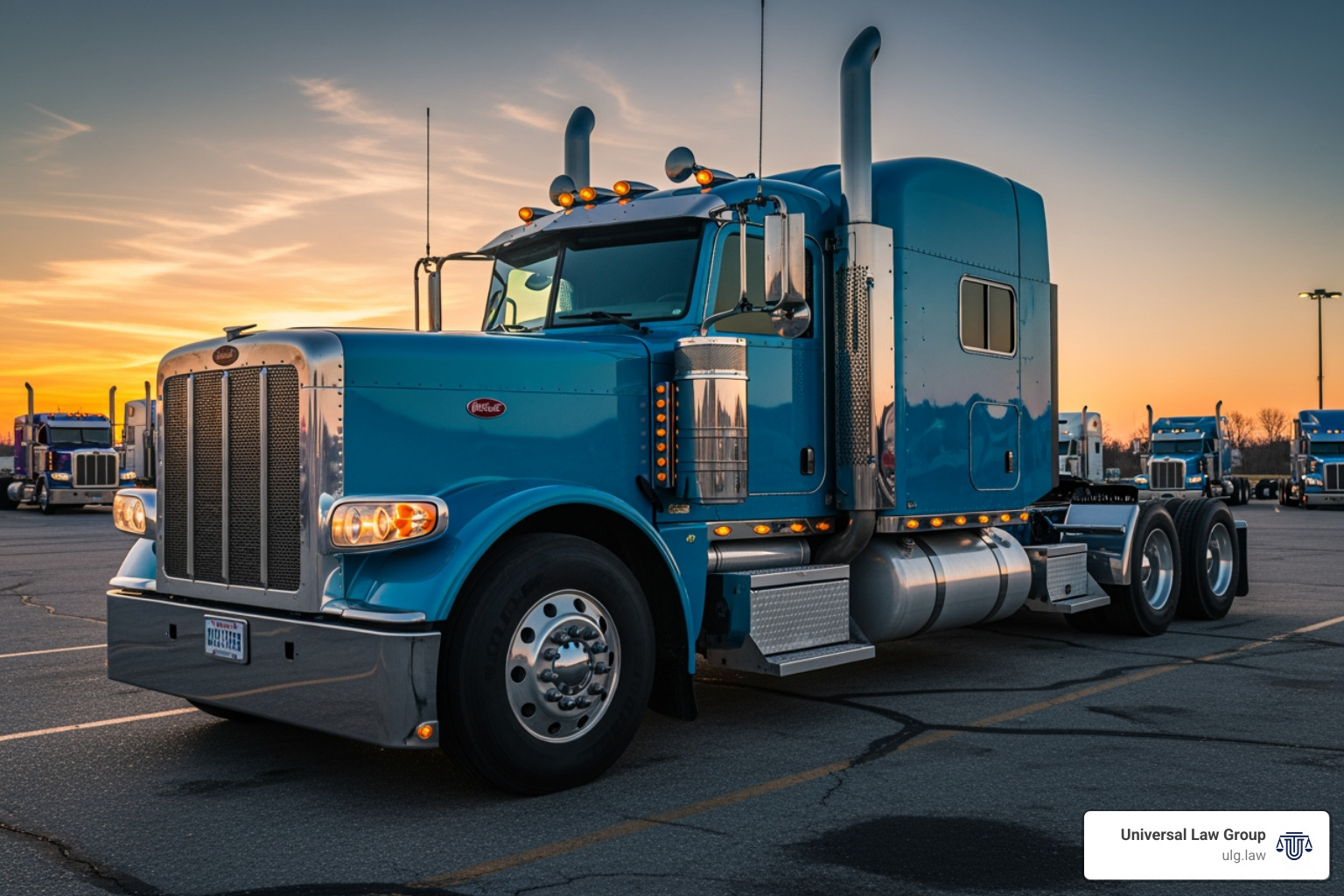
Factors influencing tractor weight include:
- Engine Size: Larger diesel engines for long-haul routes add significant weight
- Cab Configuration: Sleeper cabs with amenities weigh more than day cabs used for local routes
- Fuel Capacity: Full tanks can add 1,400-2,000 pounds (diesel weighs about 7 pounds per gallon)
- Additional Equipment: APUs, heavy-duty transmissions, and specialized equipment increase weight
From a legal perspective, understanding tractor weight helps evaluate brake capacity, stopping distance, and GVWR compliance.
How Much Does a Semi-Truck Trailer Weigh on Its Own?
An empty trailer typically weighs 10,000 to 14,000 pounds for a standard 53-foot dry van.
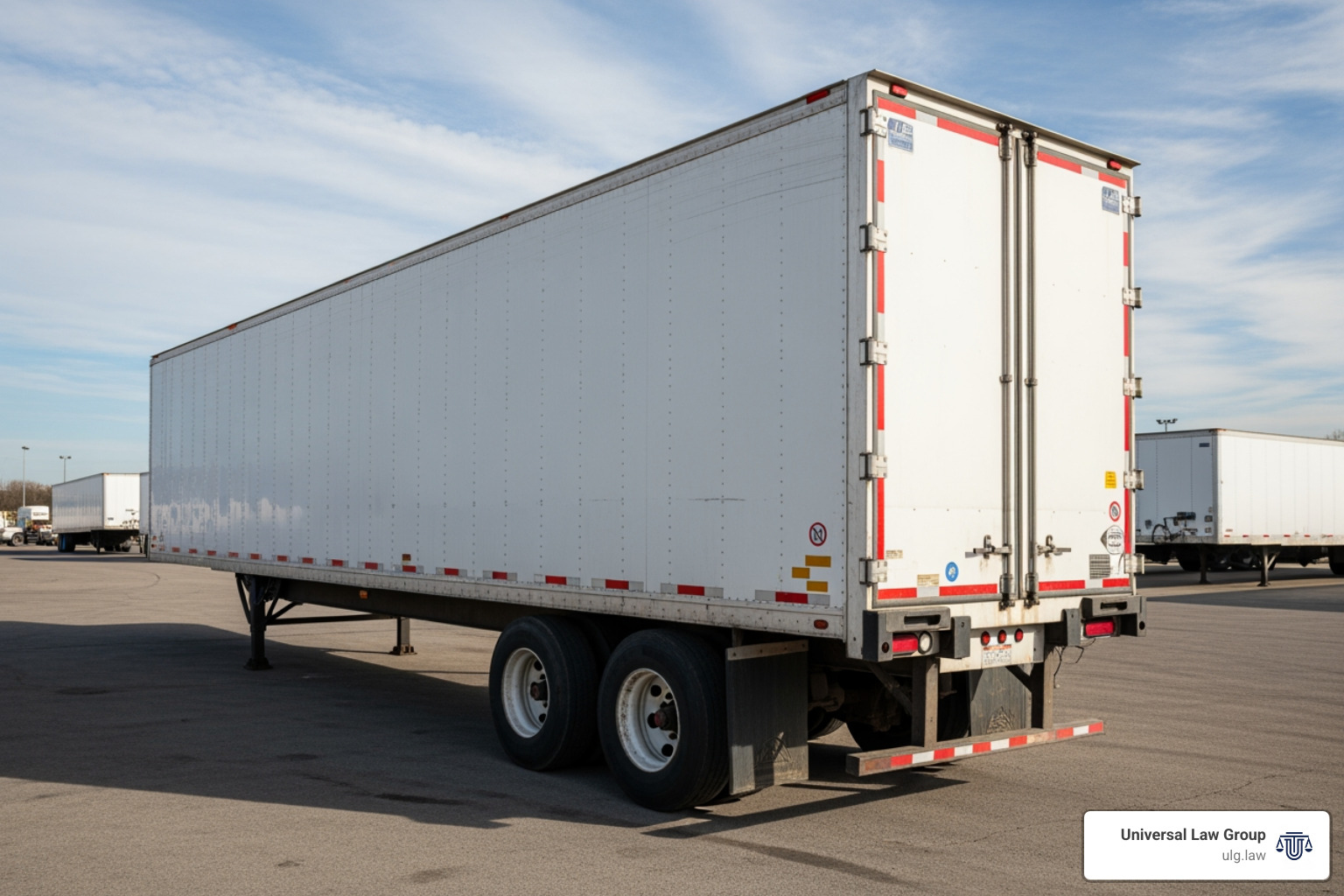
Common trailer types:
- Dry Van: 10,000-14,000 pounds for general freight
- Flatbed: Similar weight for oversized cargo like construction materials
- Refrigerated (Reefer): Heavier due to insulation and refrigeration units
- Tanker Trucks: Often heavier when empty due to robust construction
Combined, an empty tractor and trailer weigh approximately 30,000-35,000 pounds.
The Impact of Cargo on Total Weight
A semi-truck can carry up to 45,000 pounds of freight before reaching the 80,000-pound federal maximum. Dense materials like steel will “weigh out” before filling the trailer, while lighter goods may “cube out” without reaching weight limits.
Proper weight distribution is critical under federal regulations. Improperly loaded trailers can cause instability, rollovers, and jackknife crashes. We investigate bills of lading, load diagrams, and weight tickets to identify negligence in loading practices.
Understanding Key Weight Terminology and Classifications
Unladen vs. Laden Weight: What’s the Difference?
- Unladen Weight (Tare Weight): Weight without cargo, typically 30,000-35,000 pounds. The truck’s unladen weight for the tractor alone is 10,000-25,000 pounds.
- Laden Weight (Gross Weight): Total weight with cargo, legally capped at 80,000 pounds without special permits.
What is Gross Vehicle Weight Rating (GVWR)?
GVWR is the manufacturer’s maximum safe operating weight, including vehicle, cargo, fuel, and passengers. Semi-trucks are “Class 8” vehicles with GVWR over 33,001 pounds. While GVWR might be higher, legal limits cap actual weight at 80,000 pounds.
Federal Truck Weight Classifications
| Truck Class | GVWR Range (Pounds) | Examples |
|---|---|---|
| Class 1-3 | 0-14,000 | Pickups, vans |
| Class 4-6 | 14,001-26,000 | Delivery trucks, school buses |
| Class 7 | 26,001-33,000 | Garbage trucks, city buses |
| Class 8 | 33,001+ | Semi-trucks, dump trucks |
Semi-trucks are class 8 vehicles requiring specialized licensing and strict weight compliance.
How Much Does a Semi Truck Weigh Legally? Federal and State Limits
Federal Weight Limits on the Interstate System
The Federal Highway Administration sets these limits for Interstate highways:
- Gross Vehicle Weight: Maximum 80,000 pounds
- Single Axle: Maximum 20,000 pounds
- Tandem Axle: Maximum 34,000 pounds
The Bridge Gross Weight Formula prevents concentrated loads from overstressing bridges. Violating these rules is powerful evidence of negligence in Texas truck accident cases.
Texas Weight Limits and Special Permits
Texas follows federal 80,000-pound limits on major highways. With special permits for oversize/overweight loads, trucks can exceed standard limits on approved routes with conditions like escort vehicles and time restrictions. Common permitted loads include oilfield machinery, wind turbine components, and industrial equipment.
How Are Weight Limits Enforced?
Texas enforcement methods:
- Weigh Stations: Fixed facilities for full inspections
- Portable Scales: Roadside enforcement
- Weigh-in-Motion Systems: Highway-speed screening
- Electronic Bypass Systems: For compliant carriers
Consequences of Exceeding Weight Limits in Texas
- Fines: Based on excess weight
- Mandatory Offloading: Removing excess cargo
- CDL Points: Affecting driver employability
- Legal Liability: Evidence of negligence in accident cases
- Company Liability: Claims against carriers, brokers, shippers
At Universal Law Group, we investigate weight violations to hold all responsible parties accountable.
The Dangers of an Overweight Semi-Truck: Weight, Speed, and Accidents
How Does the Weight of a Semi-Truck Affect Its Stopping Distance?
At 65 mph:
- Passenger car: Approximately 300 feet to stop
- Fully loaded semi-truck: Up to 600 feet or more—twice the distance
This extended stopping distance, caused by massive momentum, worsens with wet roads, steep grades, or equipment failure. We work with accident reconstruction experts to calculate whether weight, speed, or maintenance contributed to crashes.
How Much Does a Semi Truck Weigh Compared to a Car?
- Fully loaded semi-truck: Up to 80,000 pounds
- Average car: 4,000-5,000 pounds
- Weight ratio: Semi-trucks are 20 times heavier
This “crash incompatibility” means smaller vehicle occupants suffer the most severe injuries. National data shows the vast majority killed in large truck crashes are occupants of passenger vehicles, not truck drivers.
The Link Between Truck Weight and Accident Severity
Heavier trucks mean greater momentum and more energy dissipated in crashes, resulting in:
- Traumatic brain injuries
- Spinal cord injuries and paralysis
- Multiple fractures
- Internal organ damage
- Wrongful death
When trucks are illegally overweight:
- Brakes may overheat and fail
- Tires are more likely to blow out
- Rollover risk increases
- Stopping distances extend further
Texas scenarios where weight becomes critical include oilfield traffic on rural roads, port traffic around Houston, and construction corridors in growing metro areas. Companies rushing deadlines may overload trucks, fail to account for extra weight, or pressure drivers despite handling challenges.
Frequently Asked Questions about Semi-Truck Weight
What is the average weight of a semi-truck?
An empty semi-truck weighs around 30,000-35,000 pounds. A fully loaded semi-truck can legally weigh up to 80,000 pounds on most Interstate highways.
Can a semi-truck ever weigh more than 80,000 pounds?
Yes, with special permits for “non-divisible” loads that cannot be broken down. Texas permits through TxDMV and TxDOT require designated routes, time restrictions, and escort vehicles.
Are there different weight limits for trucks operating off the Interstate Highway System?
Yes. States set their own limits for state and local roads. Some Texas roads have lower posted limits based on bridge strength or safety concerns.
Who is responsible if a truck is overloaded?
Potentially responsible parties include:
- The truck driver for operating an overloaded truck
- The trucking company for dispatching overweight loads
- Shipping/loading companies for misrepresenting cargo weight
- Brokers coordinating unsafe shipments
How can I tell if the truck that hit me was overweight?
Visible signs include trailers riding low, bulging tires, or cargo piled high. After a crash, our firm obtains weight records, company documents, and works with experts to determine if overweight conditions contributed.
Does semi-truck weight affect the value of my Texas injury claim?
Yes. Overweight or improperly loaded trucks support claims for negligence, negligent supervision, and potentially punitive damages under Texas law.
Injured in a Truck Accident? Here’s Why Weight Matters for Your Case
Understanding truck weight is critical for personal injury or wrongful death claims in Texas. It influences collision forces and proves negligence when trucks are overweight or improperly loaded.
How Our Firm Uses Truck Weight Evidence
Universal Law Group investigates:
- Weigh Station Records: From Texas DPS, TxDOT, ports, and private facilities
- Bills of Lading: Showing cargo, loading parties, and declared weights
- ECM and ELD Data: Reconstructing speed, braking, and driver hours
- Maintenance Records: Patterns suggesting routine overloading
- Company Policies: Evidence of pressure to haul overweight loads
By connecting weight to crash causation, we uncover layers of responsibility beyond simple driver error.
Potential Legal Theories Involving Truck Weight
Weight evidence supports:
- Negligence: Violating weight limits or cargo securement rules
- Negligence Per Se: Violating safety statutes
- Negligent Hiring/Training: Ignoring past violations
- Gross Negligence: Knowingly disregarding safety, potentially justifying punitive damages
Why You Should Act Quickly After a Truck Crash
Evidence disappears quickly. Bills of lading, scale tickets, and communications may not be preserved. When you hire Universal Law Group, we:
- Send spoliation letters demanding evidence preservation
- Retain accident reconstruction experts immediately
- Conduct thorough investigations and findy
If you’ve been in a collision with a commercial truck in Houston or anywhere in Texas, our experienced attorneys understand trucking regulations, vehicle physics, and insurer tactics. We invite you to contact us for a free consultation to discuss your case. Let our Houston truck accident lawyers put their knowledge of semi-truck weight and regulations to work for you. Learn more about our Houston truck accident lawyers.
About the Author