
What Is Whiplash? Everything You Need to Know
Understanding a Common but Often Misunderstood Injury
What is whiplash? Whiplash is a neck injury from a forceful, rapid back-and-forth movement of the neck, like the cracking of a whip. This sudden motion can damage the soft tissues in your cervical spine, leading to pain, stiffness, and other symptoms that may not appear immediately.
Quick Answer: Key Facts About Whiplash
- Definition: A neck injury from sudden flexion and extension.
- Most Common Cause: Rear-end car accidents.
- Symptoms: Neck pain, stiffness, headaches, shoulder pain, dizziness, and numbness or tingling in the arms.
- Onset: Symptoms can be immediate or delayed by hours or days.
- Recovery: Most people recover in a few weeks to months, but some face chronic pain.
Many people underestimate whiplash, but it can be a complex injury. While some recover quickly, others face long-term pain and disability. In fact, one in five patients remains symptomatic after a year. The challenge with whiplash is that it often doesn’t show up on standard X-rays, and symptoms can be delayed. This can create complications when seeking both medical treatment and legal compensation.
I’m Brian Nguyen, Managing Partner at Universal Law Group. My experience in personal injury law in Texas has shown me that understanding whiplash from both a medical and legal perspective is crucial. Proper, early intervention can significantly impact your recovery and your ability to secure fair compensation.
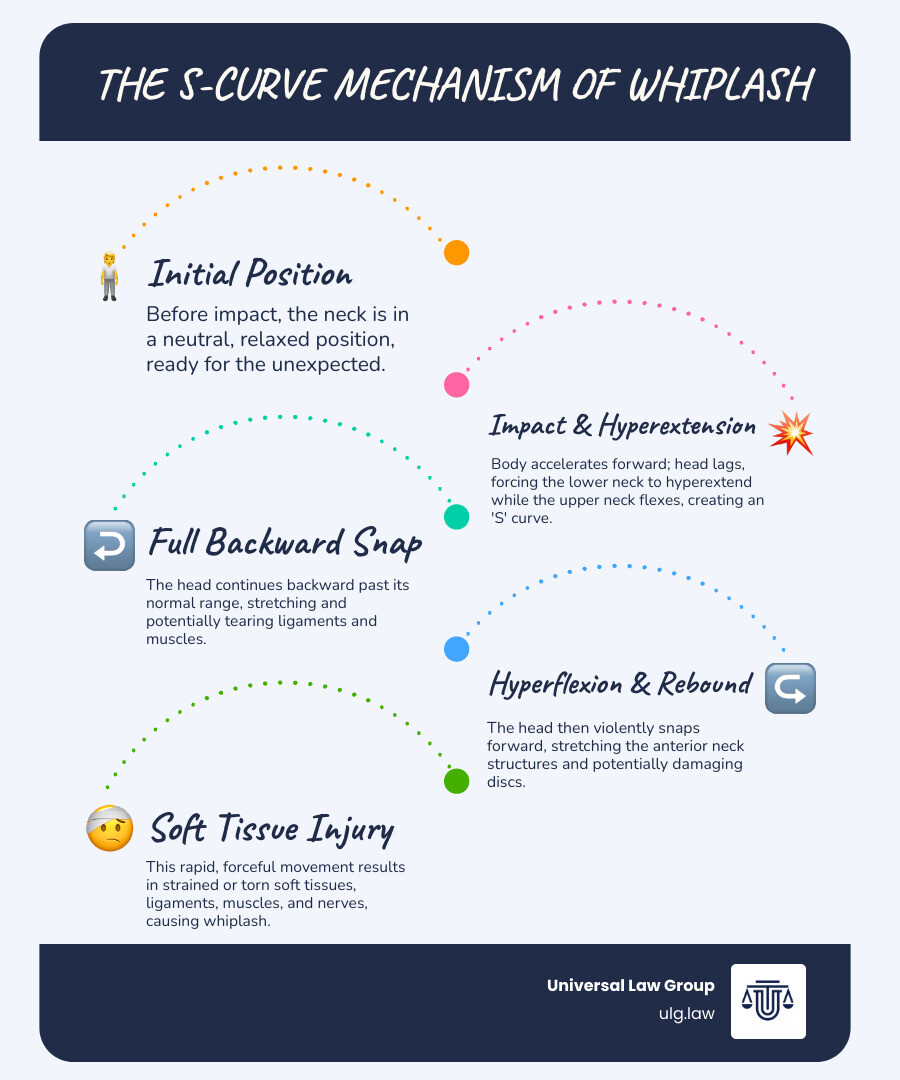
Understanding the Core Question: What is Whiplash?
Formally known as Whiplash Associated Disorders (WAD), whiplash occurs when your head is violently thrown backward (hyperextension) and then forward (hyperflexion). This rapid movement can stretch and tear the soft tissues in your neck—ligaments, muscles, and tendons. It can also affect the nerves and discs between your cervical vertebrae. The cervical spine is particularly vulnerable due to its flexibility and the weight of the head it supports.
Why This Guide Matters for Accident Victims
As a law firm dedicated to helping accident victims in Houston, we know a whiplash injury is both a medical and a legal issue. The physical pain is often compounded by financial burdens like medical bills and lost wages. This guide is designed to empower you with the knowledge to understand your injury, seek proper care, and protect your legal rights. Proper documentation and timely medical care are the bedrock of a strong personal injury claim. Our team at Universal Law Group is here to guide you through every step, from understanding your injury to fighting for the compensation you deserve.
What is Whiplash and How Does It Happen?
Whiplash is a complex injury that can cause a wide range of symptoms, from neck pain to difficulty concentrating. Understanding its causes and recognizing the warning signs early is critical for your recovery and your legal rights.
Common Causes of Whiplash Injuries
Any event that causes your head to jerk suddenly and forcefully can lead to whiplash. While car accidents are the most frequent cause, they are not the only one.

- Rear-end car accidents are the leading cause of whiplash. The impact can cause injury even at speeds as low as fifteen miles per hour. If you’ve been in any car accident, understanding your options is crucial. You can find more information about car accident claims here.
- Sports accidents, especially in contact sports like football or hockey, involve the kinds of sudden impacts that can cause whiplash.
- Physical assault or abuse, such as being shaken or struck, can result in the same damaging motion.
- Falls, particularly if you land awkwardly or your head strikes an object, can snap your neck violently.
- Amusement park rides with extreme acceleration and sudden stops can also strain the neck and cause whiplash.
The Telltale Symptoms of Whiplash
Whiplash symptoms often have a delayed onset, appearing hours or even days after the initial injury. This is why it’s important to monitor yourself closely after any accident.
The most common symptoms include:
- Neck pain and stiffness, often worsening with movement.
- Loss of range of motion in the neck.
- Headaches, typically starting at the base of the skull.
- Tenderness or pain in the shoulders, upper back, or arms.
- Tingling or numbness in the arms, which may indicate nerve involvement.
- Fatigue and dizziness.
- Blurred vision or tinnitus (ringing in the ears).
- Cognitive and emotional symptoms like sleep disturbances, irritability, difficulty concentrating, and memory problems.
When to Seek Immediate Medical Attention
While many whiplash cases are manageable, certain red flags require immediate medical evaluation. It is always better to be cautious with neck injuries.
Seek emergency care if you experience:
- Severe or worsening neck pain.
- Neurological symptoms like muscle weakness, numbness, or tingling that spreads.
- Pain that radiates down your arms or legs, which could signal nerve compression.
- Signs of a concussion or traumatic brain injury, such as confusion, loss of consciousness, persistent headaches, or nausea. For more information, visit our page on brain injuries.
A prompt diagnosis is vital for two reasons. First, it protects your health by ruling out serious conditions. Second, it creates a clear medical record linking your symptoms to the accident, which is invaluable for any legal claim. Insurance companies often argue that delayed treatment means an injury isn’t serious, so don’t give them that opportunity.
Diagnosing Whiplash: Medical Evaluation and Classification
Getting a proper diagnosis is essential for your health and for protecting your legal rights. Because whiplash is a soft tissue injury, it requires a nuanced diagnostic approach. Seeking prompt medical care creates a vital record that documents your injury and forms the foundation of your treatment plan and any potential legal claim.
How Do Doctors Diagnose What is Whiplash?
The diagnostic process is thorough. It begins with a detailed discussion about the accident and your symptoms, including when they started and how they’ve progressed. This history helps your doctor understand the mechanism of your injury.

Next is a physical examination. Your doctor will:
- Assess your range of motion by asking you to move your head in different directions.
- Check for tenderness and muscle spasms by palpating your neck, shoulders, and back.
- Test your reflexes, strength, and sensation to check for any nerve involvement.
Since standard X-rays don’t show soft tissue damage, doctors order imaging tests primarily to rule out other serious injuries.
- X-rays can identify fractures or dislocations in the cervical vertebrae.
- CT scans provide more detailed images of bone and can detect subtle fractures.
- MRI (Magnetic Resonance Imaging) is the best tool for visualizing soft tissues. It can reveal ligament tears, muscle inflammation, herniated discs, or spinal cord damage, providing objective evidence of your injury.
Whiplash is often a diagnosis of exclusion, meaning your doctor will rule out more severe conditions before confirming your symptoms are consistent with a whiplash injury.
The Quebec Task Force (QTF) Classification System
To standardize the severity of whiplash, medical professionals use the Quebec Task Force (QTF) Classification System. This system grades injuries from 0 to 4 and helps determine your prognosis and treatment plan. From a legal standpoint, it provides a clear measure of your injury’s severity.
- Grade 0: No neck complaints or physical signs.
- Grade 1: Neck pain, stiffness, or tenderness, but no physical signs found on examination.
- Grade 2: Neck complaints along with musculoskeletal signs, such as decreased range of motion and point tenderness. This is the most common grade.
- Grade 3: Neck complaints plus neurological signs, such as decreased reflexes, muscle weakness, or sensory deficits (numbness/tingling).
- Grade 4: Neck complaints along with a fracture or dislocation of the cervical spine.
Higher grades typically mean longer recovery times and more extensive treatment. This classification is a crucial tool when we demonstrate the severity of your injury to an insurance company or in court. You can learn more about the science behind this system here: Scientific research on WAD classification.
Whiplash Treatment and the Road to Recovery
After a whiplash diagnosis, treatment focuses on managing pain, restoring neck function, and preventing long-term complications. There is no one-size-fits-all approach; your healthcare provider will develop an individualized treatment plan that evolves as you heal.
Immediate and Short-Term Treatment Options
In the first few days, the goal is to reduce pain and inflammation. Modern medicine has shown that gentle, active movement often leads to better outcomes than prolonged rest.
- Rest vs. Mobilization: While some initial rest is needed, prolonged immobilization (like wearing a soft collar for weeks) is discouraged. Gentle activity promotes healing and prevents stiffness.
- Ice Application: Apply ice packs for 15-20 minutes at a time during the first 24-48 hours to reduce swelling and pain.
- Pain Medications: Over-the-counter NSAIDs (ibuprofen, naproxen) can help with pain and inflammation. Your doctor may prescribe stronger painkillers or muscle relaxants for severe pain.
- Cervical Collar: A soft collar may be recommended for short-term use (a few days) to provide support, but long-term use can weaken neck muscles.
- Gentle Movement: As soon as pain allows, your doctor will recommend gentle stretches to restore range of motion.
Long-Term Rehabilitation and Therapies
For many, recovery extends beyond the first few weeks. Long-term rehabilitation focuses on rebuilding strength, flexibility, and proper movement patterns.
Physical therapy is a cornerstone of whiplash treatment. A therapist will design a personalized program of stretches and strengthening exercises. Other effective therapies include:
- Chiropractic care: Uses spinal adjustments to restore alignment and reduce pain.
- Massage therapy: Addresses muscle tension, reduces pain, and improves circulation.
- Acupuncture: A traditional technique that many patients report helps alleviate pain.
- TENS (Transcutaneous electrical nerve stimulation): Uses a low-voltage current to block pain signals.
- Injections: Corticosteroid or trigger point injections may be considered for persistent pain that doesn’t respond to other treatments.
For more guidance, the Whiplash Injury Recovery Self Help Guide offers helpful information.
How Long Does Recovery Take?
The recovery timeline for whiplash varies greatly. Most people recover within a few weeks to a few months, but some experience symptoms for much longer. Factors influencing recovery include:
- Injury Severity: Higher-grade injuries (QTF Grades 3-4) require longer, more complex recoveries.
- Age and Pre-existing Conditions: Older adults and those with prior neck issues may have a slower healing process.
- Initial Symptoms: Intense initial pain or neurological symptoms can indicate a longer recovery.
While most people recover well, only 1 in 5 patients remain symptomatic after 12 months, highlighting the potential for chronic issues.
Long-Term Complications and Your Legal Rights
For some, whiplash recovery is not a straight line. A significant number of people develop Chronic Whiplash Syndrome, with persistent symptoms that can last for months or years, profoundly affecting their quality of life and ability to work.
Potential Complications of Untreated or Severe Whiplash
When whiplash is severe or goes untreated, the consequences can be debilitating. Long-term complications can include:
- Chronic neck pain and stiffness that interferes with daily activities.
- Severe, persistent headaches, often originating at the base of the skull.
- Dizziness and vertigo, creating balance issues that can make driving unsafe.
- Temporomandibular joint (TMJ) disorders, causing jaw pain and difficulty chewing.
- Psychological effects such as depression, anxiety, and PTSD from living with chronic pain.
These complications have a devastating impact on work and daily life. One statistic reveals that only 11.5% of individuals could return to work a year after their injury. This demonstrates how a single moment of impact can alter your career and earning potential for decades.
Protecting Your Rights After a Whiplash Injury in Texas
If someone else’s negligence caused your whiplash injury, you have legal rights in Texas. Acting quickly and correctly is crucial to protecting them.
- Statute of Limitations: In Texas, you generally have two years from the date of injury to file a lawsuit. This deadline is strict.
- Documentation is Key: Keep meticulous records of all medical appointments, treatments, and expenses. Maintain a daily journal to document your symptoms and how they affect your life.
- Gather Evidence: Obtain the police report, medical records, photos of the scene and vehicle damage, and witness information.
- Dealing with Insurance Companies: Be cautious. Adjusters aim to minimize payouts. Never give a recorded statement or sign documents without consulting an attorney. A quick settlement offer may not cover the full extent of your injuries, especially with delayed symptoms.
- Understanding Fault in Texas: Texas follows a “proportionate responsibility” rule. You can recover damages if you are 50% or less at fault, but your compensation will be reduced by your percentage of fault. Navigating these rules is complex, especially in car accidents.
How a Personal Injury Lawyer Can Help
Navigating the aftermath of an accident while healing is overwhelming. At Universal Law Group, we handle the legal battles so you can focus on recovery.
An experienced lawyer will:
- Calculate all damages, including future medical expenses, lost earning capacity, and pain and suffering.
- Negotiate with insurance adjusters on your behalf, using our experience to counter their tactics and push for a fair settlement.
- Prove liability by building a compelling case with evidence and expert testimony.
- Steer the entire legal process, from filing paperwork to representing you in court if necessary.
Our team at Universal Law Group in Houston uses our experience, including that of former prosecutors, to build the strongest possible case for our clients. We understand the challenges of whiplash cases and are committed to fighting for the justice you deserve.
Frequently Asked Questions about Whiplash
Clients often have similar questions and concerns after a whiplash injury. Here are straightforward answers to the most common ones.
Can whiplash cause permanent damage?
Yes, in some cases, whiplash can cause permanent damage. While most people recover fully, about one in five individuals develop chronic whiplash-associated disorders (WAD), with symptoms like persistent pain and headaches lasting a year or more.
The risk of long-term complications is higher with:
- Severe initial symptoms (especially neurological signs)
- Older age
- Pre-existing neck problems or prior whiplash injuries
This is why timely and appropriate medical treatment is critical. It can significantly improve your chances of a full recovery and is essential for documenting your case.
Is it safe to drive after a whiplash injury?
This depends on your specific symptoms and your doctor’s advice. You should not drive if you are experiencing:
- Significant neck pain or stiffness that prevents you from checking blind spots.
- Dizziness, vertigo, or blurred vision.
- Drowsiness or slowed reaction time from pain medications.
Your doctor will assess your range of motion and pain levels before clearing you to drive. Prioritize your safety and the safety of others on the road—don’t rush back behind the wheel.
How can I prevent whiplash in a car?
While you can’t control other drivers, you can take steps to reduce your risk of whiplash in a collision.
- Adjust your headrest properly. The top of the headrest should be level with the top of your head and no more than two to three inches away. This minimizes how far your head can snap back.
- Maintain proper posture. Sit upright with your back firmly against the seat.
- Drive defensively. Keep a safe following distance and stay alert to avoid sudden stops or collisions.
- Consider vehicle safety features. Many newer cars have active head restraints or collision warning systems that can help mitigate whiplash risk.
Even with precautions, accidents happen. If you are injured, knowing your rights is the next crucial step.
Your Next Steps After Whiplash
What is whiplash? As we’ve explored, it is a legitimate and potentially serious medical condition that can have profound physical, emotional, and financial consequences. It is far more than a simple stiff neck.
We’ve covered how this injury occurs, its often-delayed symptoms, the diagnostic process, and the wide range of treatments required for recovery. Most importantly, we’ve confronted the reality that whiplash can lead to chronic pain and long-term disability for a significant number of people. The statistics on chronic symptoms and the immense economic cost of these injuries underscore the need to take whiplash seriously from the very beginning.
As attorneys at Universal Law Group, we have seen the toll whiplash takes on our clients and their families. We’ve also seen the critical difference that strong legal advocacy can make in a person’s recovery journey.
If you’ve suffered a whiplash injury in an accident, understanding your legal options is an essential step. The path to fair compensation involves navigating complex medical evidence and Texas personal injury law, all while dealing with insurance companies that aim to minimize your claim. You do not have to face this challenge alone.
At Universal Law Group in Houston, we use our extensive experience to build compelling cases and fight for the maximum compensation our clients deserve. The two-year statute of limitations in Texas means that time is of the essence.
Contact our Houston personal injury team for a free consultation. Let us shoulder the legal burden so you can focus on what matters most: your recovery and your future.
About the Author